Drip Style: The Handwritten Font That Sells Sweetness
Understanding the Allure of Drip Style
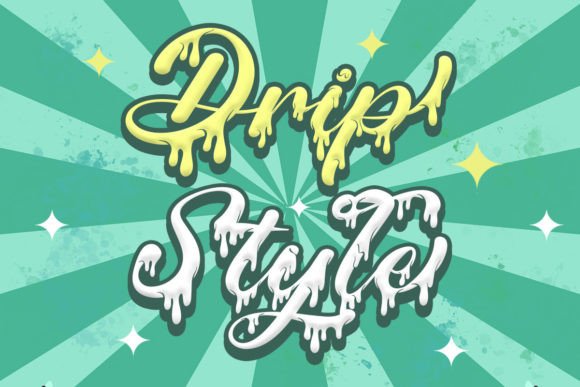
There is a specific kind of nostalgia that hits you when you see a font that mimics the chaotic beauty of icing sliding down the side of a fresh donut or chocolate melting over a strawberry. That is the exact territory Drip Style occupies. As a handwritten font, it steps away from the rigid geometry of standard sans serif font options and the stuffiness of traditional serif font families. Instead, it offers a visual texture that feels tactile, messy in the best way, and undeniably delicious. It isn’t just a typeface; it is a design asset that immediately sets a mood. When you look at the letterforms, you aren't just reading text; you are seeing a representation of viscosity and flow. The character of the letters suggests movement, which is a powerful psychological trigger in modern typography.
The visual personality of this typeface is loud, playful, and unapologetically indulgent. If you are working on a brand identity for a bakery, a candy shop, or a summer festival, you need a font that screams "fun" without you having to explain it. Drip Style does that heavy lifting. The irregular baselines and the varying stroke widths give it that authentic, human touch that a computer-generated script often lacks. It captures the energy of a quick sketch on a napkin but polishes it enough to be a viable commercial font. It avoids the sterile perfection of vector art, which can sometimes feel cold and corporate. Instead, it invites the viewer in with a sense of warmth and whimsy.
Real-World Applications: Where Drip Style Shines
The utility of a premium font lies in its versatility, but Drip Style excels in specific niches where atmosphere is more important than strict legibility. The most obvious application is in packaging design. Imagine walking down a grocery aisle. You see a jar of hot fudge sauce. One label uses a standard Arial typeface. The other uses Drip Style. The latter immediately communicates that the product inside is rich, sweet, and perhaps a little messy—the kind of treat you eat with a spoon. The font acts as a visual shortcut to the product's taste profile. It is an essential tool for any designer working in the food and beverage sector.
Beyond physical packaging, this creative font has massive potential in digital design and social media graphics. In the fast-scrolling environment of Instagram or TikTok, you have milliseconds to grab attention. A standard script font might blend into the background, but the distinct "melting" effect of Drip Style creates a focal point. It works exceptionally well for:
- Logo Design: Creating a memorable mark for ice cream parlors, donut shops, or candy stores.
- Editorial Design: Using it for pull quotes or headers in a food magazine to break up the monotony of body text.
- Event Branding: Designing posters for bake sales, Halloween parties, or summer BBQs where a spooky or sweet vibe is needed.
- Web Design: Implementing it as a hero text element on a landing page to immediately establish a playful tone.
However, it is important to recognize the boundaries. You wouldn't use Drip Style for a corporate law firm’s annual report or a pharmaceutical instruction manual. The personality of the font is too strong for serious, high-stakes information. It thrives in environments where the goal is to delight, entice, and entertain. It is a tool for engagement, not necessarily for dense information transfer. When used correctly, it becomes the anchor of the visual hierarchy, drawing the eye exactly where you want it to go.
Strategic Implementation and Technical Versatility
One of the most practical advantages of working with a high-quality display font like this is the technical infrastructure behind it. The prompt mentions that Drip Style is PUA coded (Private Use Areas). For those outside the design world, this might sound like jargon, but for a graphic designer, it is a lifesaver. PUA coding means that every glyph, swash, and alternate character is fully accessible regardless of what software you are using. Whether you are in Adobe Illustrator, Photoshop, or even a basic program that doesn't support advanced OpenType features, you can still access the full range of stylistic alternates. This ensures that you get the full value out of the design assets you purchase, allowing you to customize the text to fit the exact space and aesthetic you need.
When integrating Drip Style into a broader layout, font pairing is critical. Because this font has such a distinct texture and silhouette, it demands a partner that steps back and plays a supporting role. If you pair it with another ornate script font or a complex serif, the design will become cluttered and difficult to read. The best practice is to contrast the organic, fluid nature of the dripping letters with something clean and structured. A geometric sans serif font usually works best here. Think of fonts like Montserrat, Futura, or Open Sans. These neutral backgrounds allow the personality of Drip Style to pop without overwhelming the viewer. This balance is the key to professional modern typography.
Maximizing Readability and Hierarchy
While aesthetics are subjective, readability is objective. As a general rule in web design and print, Drip Style should be reserved for display purposes. This means headers, titles, logos, and short bursts of text. It is not a body copy font. If you try to write a paragraph in this typeface, the eye will fatigue quickly because of the complex shapes the brain has to decipher.
Instead, use it to establish a strong visual hierarchy. Let the "drip" effect serve as the attention-grabber at the top of the page, then transition to a highly legible serif or sans-serif for the information that follows. This creates a rhythm in your design. The viewer gets the "vibe" from the headline and then can comfortably consume the details in the body text. This approach respects the user experience while still leveraging the unique charm of the handwritten font.
For entrepreneurs and small business owners, choosing a font like this is an investment in distinctiveness. In a market saturated with generic templates, a unique typeface helps you stand out. It signals that you care about the details of your presentation. Whether you are a baker designing your own cake menus or a marketer creating a campaign for a client, Drip Style provides a reliable way to inject personality into your work. It bridges the gap between professional commercial font quality and the raw, authentic feel of hand-lettering, giving you the best of both worlds for your next creative project.