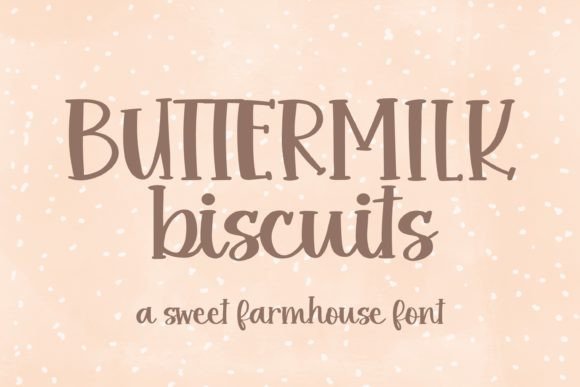
Buttermilk Biscuits: A Handmade Touch for Modern Design
There’s a specific warmth that comes with hand-lettering. It’s imperfect, personal, and immediately inviting. In a digital landscape often dominated by clean, geometric sans serif fonts, a well-crafted handwritten font like Buttermilk Biscuits serves as a bridge between digital precision and human touch. This isn't just another script font; it is a carefully designed typeface that mimics the flow of a relaxed hand holding a marker or brush pen. For designers, crafters, and entrepreneurs, understanding how to leverage this style is key to creating designs that resonate on a personal level.
Visual Character and Design Anatomy
When you first look at Buttermilk Biscuits, you notice the baseline movement. Unlike rigid digital typefaces, the letters dance slightly, giving the text a lively rhythm. The character set features soft edges and varying stroke widths, mimicking the pressure changes of natural handwriting. This creates a texture that feels organic rather than manufactured.
The personality of this font is approachable and rustic. It avoids the overly formal loops of traditional calligraphy, opting instead for a casual, legible style. This makes it a distinct alternative to standard serif fonts or modern sans serif options. The visual weight is balanced; it’s bold enough to be used for headlines but retains enough detail to work for shorter descriptive text. It functions beautifully as a display font, drawing the eye without overwhelming the rest of the layout.
Where This Farmhouse Handwritten Font Shines
The versatility of Buttermilk Biscuits extends far beyond rustic farmhouse decor, though it certainly excels there. Its charm lies in its adaptability across various mediums. Here is where this font finds its strongest footing:
- Branding and Logo Design: For small businesses, particularly in the food, lifestyle, or boutique sectors, this font offers instant personality. It works exceptionally well for bakeries, coffee shops, or artisanal brands that want to project a "homemade" or "small-batch" aesthetic. Using it in logo design helps build a brand identity that feels accessible and friendly.
- Packaging Design: On physical products, the texture of the font translates well. It suggests that the product inside was made with care. It pairs effectively with kraft paper textures or minimalist white backgrounds to create contrast.
- Social Media Graphics: In the fast-scrolling environment of Instagram or Pinterest, handwritten typography stops the thumb. It breaks the monotony of standard web-safe fonts. It is excellent for quotes, promotional announcements, and story overlays where you want to speak to the audience, not at them.
- Stationery and Wedding Invites: For personal projects, such as wedding invitations or greeting cards, Buttermilk Biscuits adds a layer of intimacy. It suggests that the sender took the time to choose something special.
Strategic Application: Readability and Hierarchy
As a designer or content creator, your primary goal is communication. While a creative font adds flair, it must not compromise readability. Buttermilk Biscuits is designed with legibility in mind, but context matters.
Visual Hierarchy: Use this font to create a clear distinction between your headline and your body copy. Because it has a strong personality, it naturally commands attention. Pairing it with a neutral, geometric sans serif font for body text creates a pleasing contrast. The handwritten style draws the eye first, while the sans serif provides a clean reading experience for longer paragraphs.
Brand Perception: Typography is a silent ambassador for your brand. Choosing a handwritten font like Buttermilk Biscuits signals creativity, approachability, and authenticity. It moves your brand away from corporate rigidity and toward a more human-centric model. However, if your brand requires strict authority and formality, a serif font might be a better primary choice, with Buttermilk Biscuits reserved for accent text.
Practical Guidance for Implementation
Choosing a font is a design decision, but implementing it requires technical consideration. Here is how to get the most out of this asset:
- Test Your Pairings: Never use a font in isolation. Before finalizing a design, test Buttermilk Biscuits against your other design assets. Does it clash with your photography style? Does it look too casual next to a formal serif font? A good rule of thumb is to pair high-personality fonts with low-personality fonts.
- Spacing and Kerning: Handwritten fonts often require manual adjustment. Because the letters are designed to look natural, the default digital spacing might feel too tight or too loose. Take the time to adjust the tracking and kerning, especially for large headline text in editorial design or posters.
- Color and Size: This font performs best at medium to large sizes. At very small sizes, the "handmade" details can get lost, turning the text into a visual blur. Use it for headers, sub-headers, and pull quotes rather than fine print or legal disclaimers.
- Licensing for Commercial Use: If you are a small business owner or entrepreneur, ensure you are using a premium font with the correct license. Most professional design work requires a commercial license. This protects you legally and ensures the font creator is supported, allowing for continued development of high-quality font families.
Elevating Your Creative Toolkit
In the world of modern typography, variety is essential. Relying solely on standard system fonts can make your work look generic. Integrating a distinct typeface like Buttermilk Biscuits into your toolkit gives you a specific weapon for specific battles—namely, the battle for attention and emotional connection.
Whether you are designing a website landing page, a set of social media templates, or physical signage for a local market, this font offers a solution that is both practical and evocative. It bridges the gap between the digital and the physical, making your screen-based designs feel tangible. For crafters using machines like Cricut, the SVG compatibility ensures that the transition from screen to cut material is seamless, preserving the integrity of the letterforms.
Ultimately, the goal of good design is to make the viewer feel something. Buttermilk Biscuits excels at evoking feelings of comfort, nostalgia, and authenticity. By using it strategically and pairing it thoughtfully, you can elevate your projects from simple layouts to engaging visual stories. It is more than just a collection of letters; it is a tool for building connection.